

Across decades of work in organization development, leadership consulting, and global cross-cultural work, I have watched men navigate pressures they rarely articulate. I have seen how cultural expectations shape their choices, how silence becomes a survival strategy, and how inherited scripts about power, identity, and belonging follow them from childhood into boardrooms, marriages, and fatherhood. Men do not simply “become” who they are — they assemble identities from the scripts handed to them long before they understand their weight.
Today, the social identity of men has been constructed as allies to women. Allies meaning they offer advocacy and support to a marginalized group; namely, women, thus positioning themselves to be outside the realm of needing allyship. To simplify this, social and cultural construction identify older and/or aging individuals based on the social identity as a group in need of allyship as they have “aged out” of a common social identity of being competent, productive, and agile into an outsider marginalized group in need of allyship. It is inside this group that social identity takes root, as individuals absorb myths, stereotypes, and stigmas that shape how they see themselves. These categories become firmly entrenched, quietly shaping beliefs about who is capable, who is valued, and who is accepted.

The identity of men today resides within the construct of allyship to women—a group socially characterized and identified as marginalized due to inequities, and the social and cultural construction of what women can achieve. Similar to age being a determinant for exclusion, for women, so is gender. Let’s sit with that for a moment while we contemplate the intersectionality of women and men.
My witness is not solely theoretical. It is lived. It is observed. It is an anthropologic cultural exploration repeated across thousands of conversations, classrooms, coaching sessions, and family moments. As mother to two sons, grandmother to my only grandson, sister, daughter, wife, and as a direct report of male leaders, my upcoming book and collaboration series will explore power, identity and belonging of men through a woman’s eyes–a story shaped by motherhood, sisterhood, marriage and corporate culture. And what I’ve learned is this: when men begin to Interrupt! these inherited scripts, they unlock a deeper, more courageous version of themselves. This book — and these dialogue sessions — are an exploration of those interruptions and the identities men create when they finally step outside the story. Men do not arrive in the world with a clear understanding of who they are meant to be. Instead, they inherit unwritten scripts—quiet expectations passed down through families, communities, culture, and history. These scripts shape how boys learn to express strength, navigate fear, seek connection, and define themselves long before they have the language to describe what they feel. I have spent my life watching these scripts unfold: in my brother, in my husband, in my sons, my grandson, and in former leaders. I have witnessed how men carry these inherited stories, how they struggle beneath them, and how they sometimes rewrite them with courage and intention.
Over time, I began to see that every script touches three essential parts of a man’s life: Power, Identity, and Belonging. Power shapes how men understand responsibility, influence, and emotional restriction. Identity determines how they define themselves amid expectations they never chose. Belonging reveals how they search for connection in a culture that often isolates them. These three forces appear in childhood, echo through adolescence, and shape the men they become.
This work is my witness to those forces — and to the ways men inherit, resist, and ultimately recreate the stories that define them. It’s about what I’ve witnessed — and what I’ve learned — as the men around me navigate the scripts they never asked for and the identities, they courageously create.
“Anxiety is the gap between now and then” – Fritz Perls
Many men live between who they are and who they must become. This quote captures the tension that arises when identity is governed by future expectations rather than present authenticity.
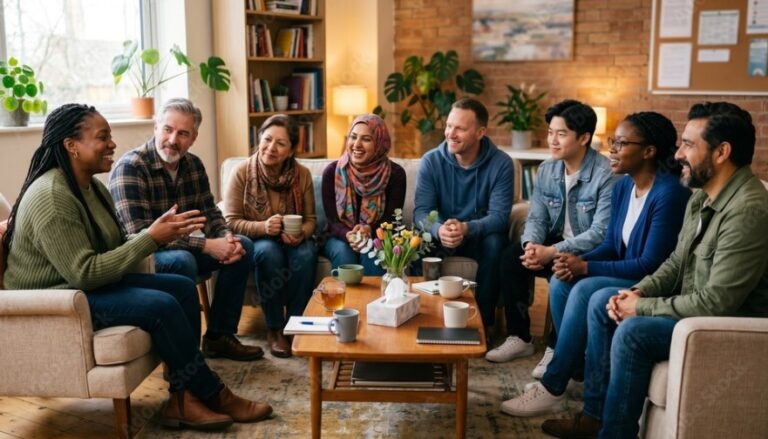
Dialogue & CreativeWorks presents “A Seat at the Table” four-part dialogue series starting October 21, 2026. (visit our Events page for further details)