

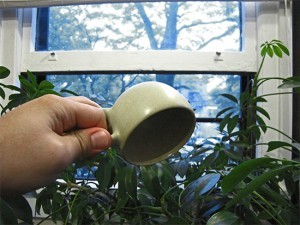
Like all living organisms, e.g., plants, animals, trees and shrubs, teams require sustained nutrition to remain healthy. Leaders today face radical uncertainty with events “moving far outside the boundaries of what we know from the past. When the shape of the probability distribution can’t be mapped, leaders tend toward paralysis” (Weber, 2025). To move out of this inaction leaders tend to look for a short-term signal to solve the issue thus resulting in what can appear to be huge oscillations or ping-ponging between shiny objects. This ping-ponging (Weber, 2025) becomes exhausting to the leader and to the team. This behavior is followed by a strong desire and need by the team and the leader for large doses of potassium, fertilizer, and water, i.e. stability and reassurance.
Self-Care and Replenishment is Not Optional
People can only give from a place of abundance. If leaders have not replenished themselves, they are unable to bring the best versions of themselves to not only the team, but to the organization and to their own agility. Being better for everyone, means first being better for oneself. Prioritizing self-care to effectively serve others and the organization is not an option. The concept of “running on empty” resonates with burnout and depletion and the inability to offer meaningful and impactful decision-making. Back in the day, it may have been a bragging point to “burn the candle at both ends,” but today it only means less than optimal outcomes. One of leaderships major responsibilities is to develop their people. How can you pour into your people if your cup is empty? Please authentically share how you are filling your cup or plan to fill your cup. For those whose cups are overflowing, your sharing allyship is most welcome.
Note to Self: In the words of author, Peter Block, “the answer to “how” is yes.